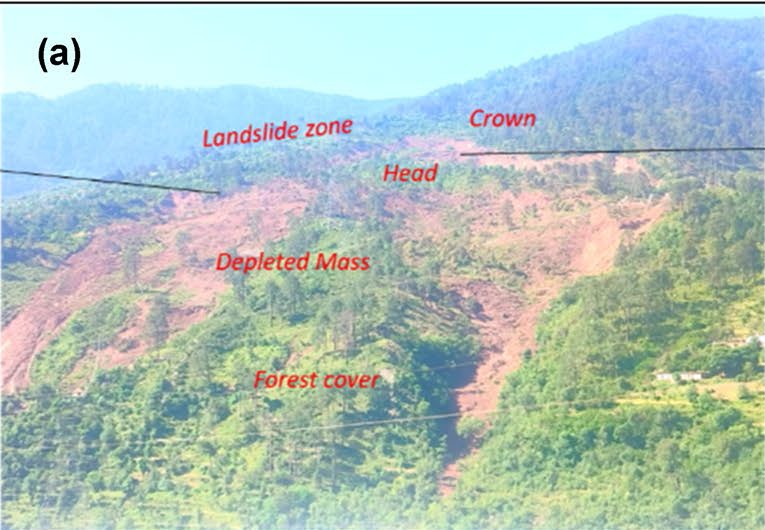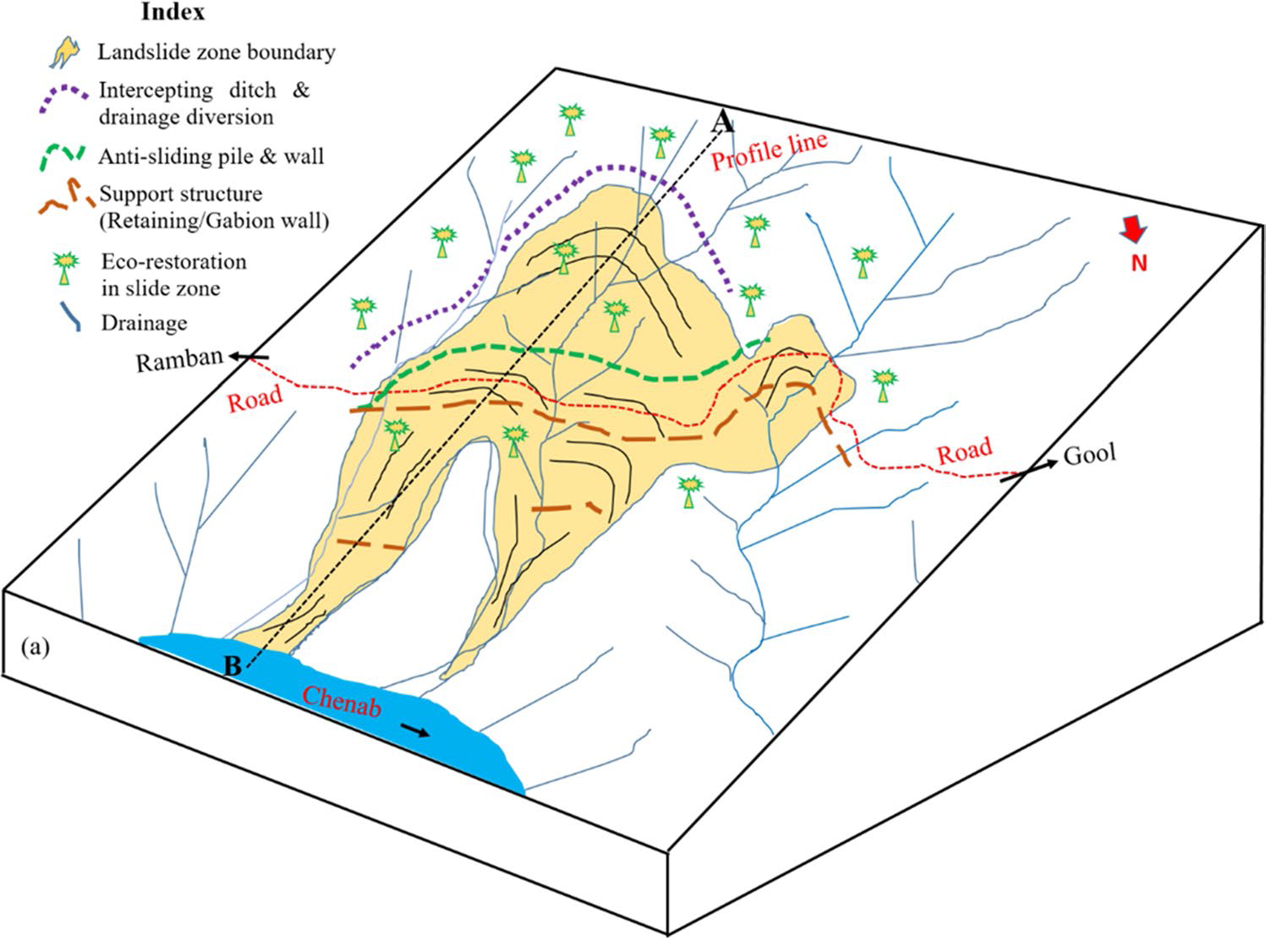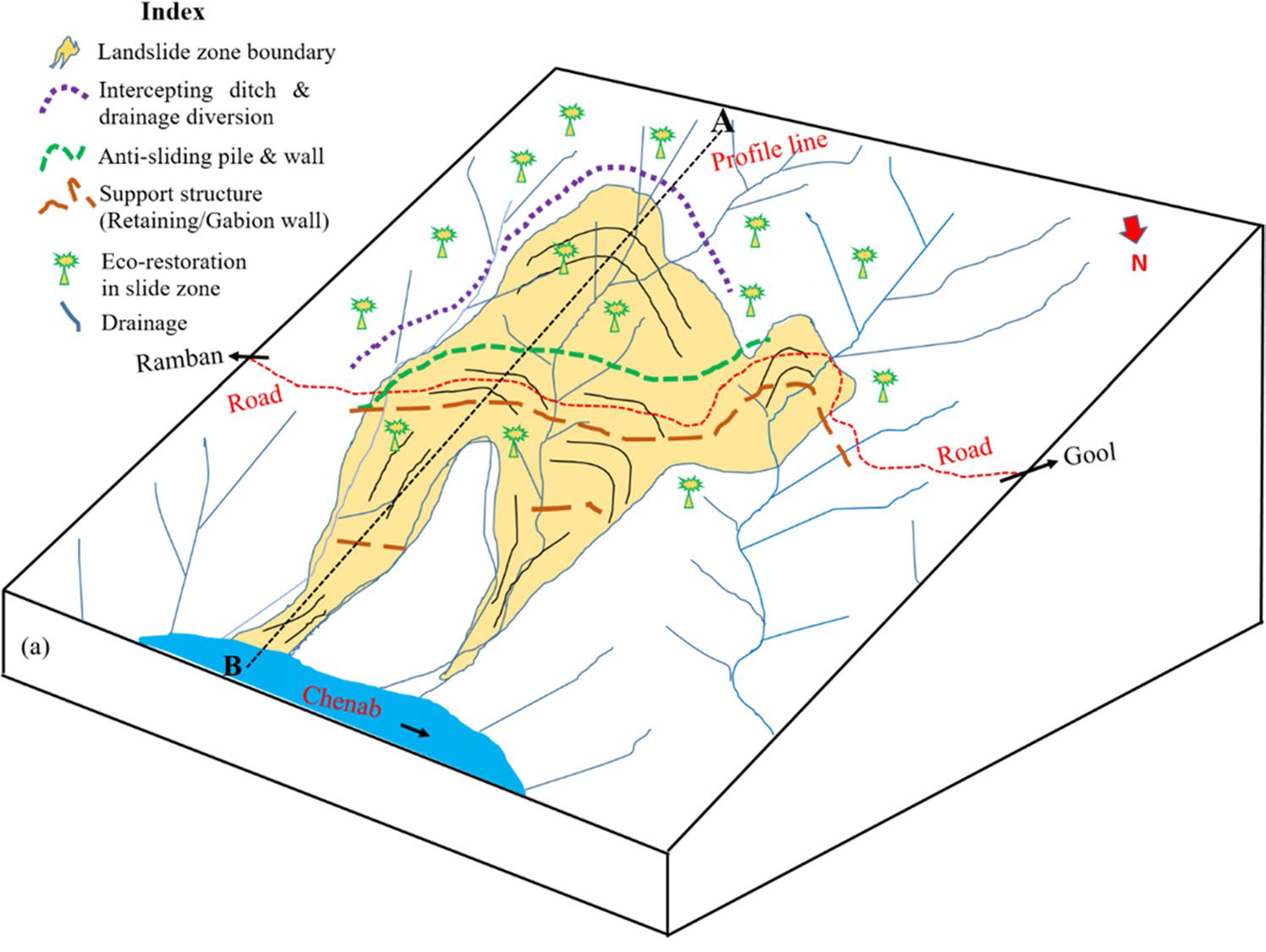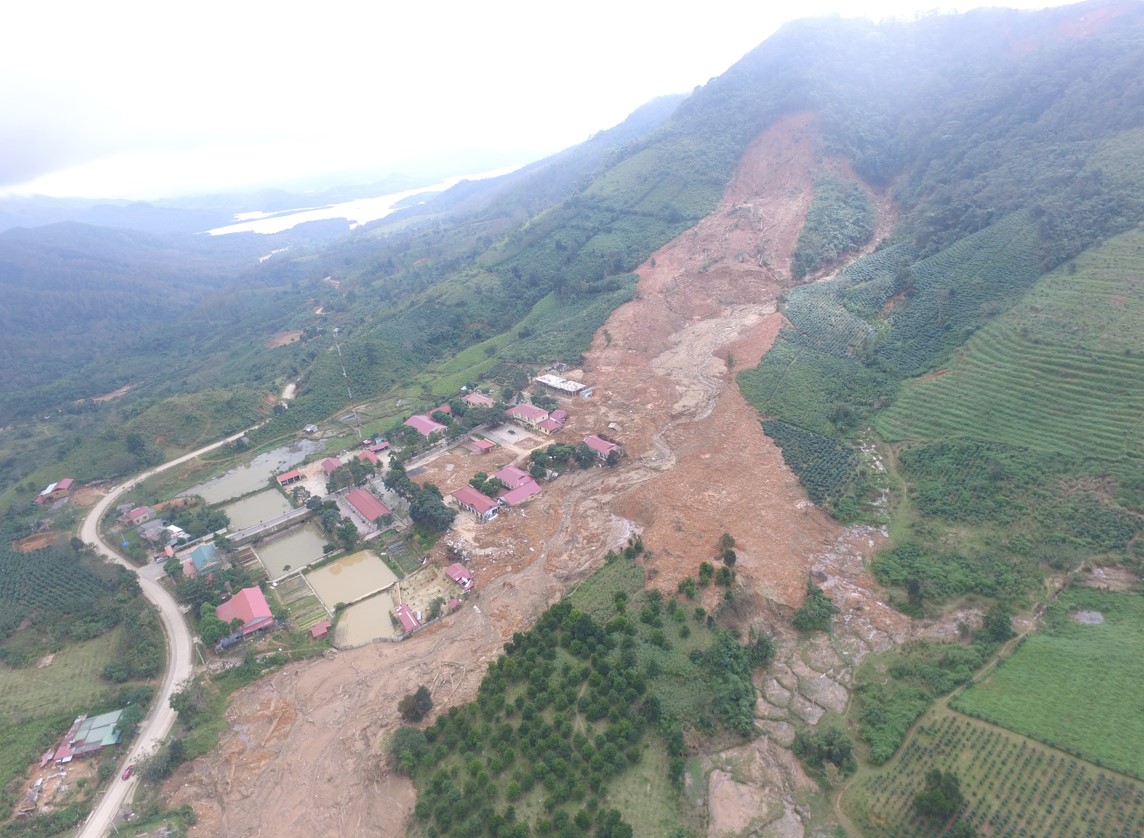


Pernote Landslide, Ramban, J&K, India

LCI : PLRJKI25042024
Main Information
Landslide Name : Pernote Landslide, Ramban, J&K, India
Latitude : 33:14:32.46 N
Longitude : 75:12:28.76 E
Location
City / District : Ramban
Province : Jammu and Kashmir
Country : India
Reporter
Reporter 1 : Riyaz Mir
Reporter 2 : Riyaz Mir
Landslide Type
Material : Debris, Earth
Movement : Slide, Spread, Flow, Complex
Velocity (mm/sec) : Moderate
Depth (m) : Deep-Moderate
Slope (degree) : Steep
Volume (m³) : Large-Moderate
Date of Occurence
Date of Occurence : Apr 25, 2024
Other Information
Land Use Source area : Forest, Farming, Pasture, Human settlement, Road
Run-out/deposition area : Farming, Human settlement, Road, River
Other Activity : Currently active
Triggering Factor : Rainfall
Death(s) & Missing : 500 people evacuated
Houses and other structural damage : 55 houses partially/fully damaged, 800 m stretch of Ramban–Gool road destroyed, 4 electricity towers collapsed, water supply pipeline damaged
Photo of landslide :
Google earth kmz file : Pernote_Landslide_J&K_India.shp.kmz
Plan of landslide :
Cross section of landslide :
Reference (paper/report) : Landslides 22, 1577–1596 (2025). https://doi.org/10.1007/s10346-025-02469-z
Testing graph : Testing_graph_Pernote.tiff
Monitoring graph : Monitoring_Grapgh_Pernote1.jpg
Video of moving landslides including 3D simulation : https://www.facebook.com/share/v/1NsZjHFAiG/
Description :

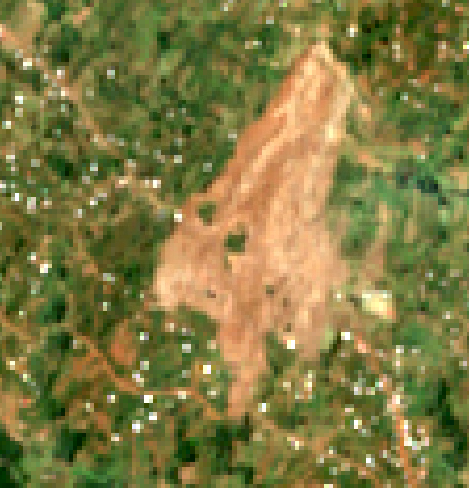
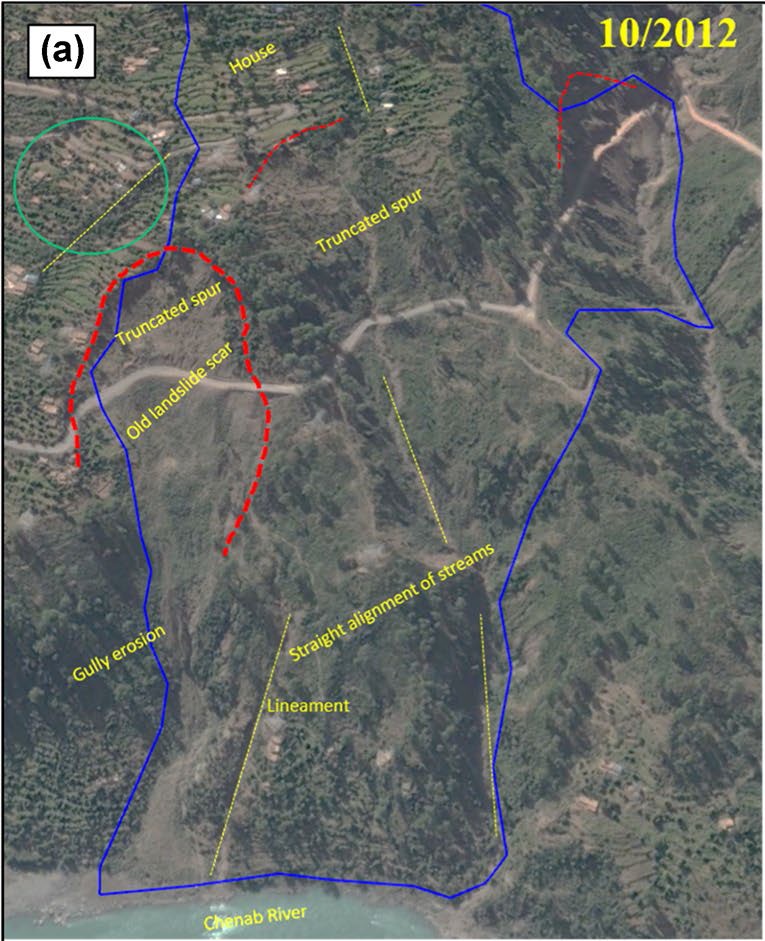
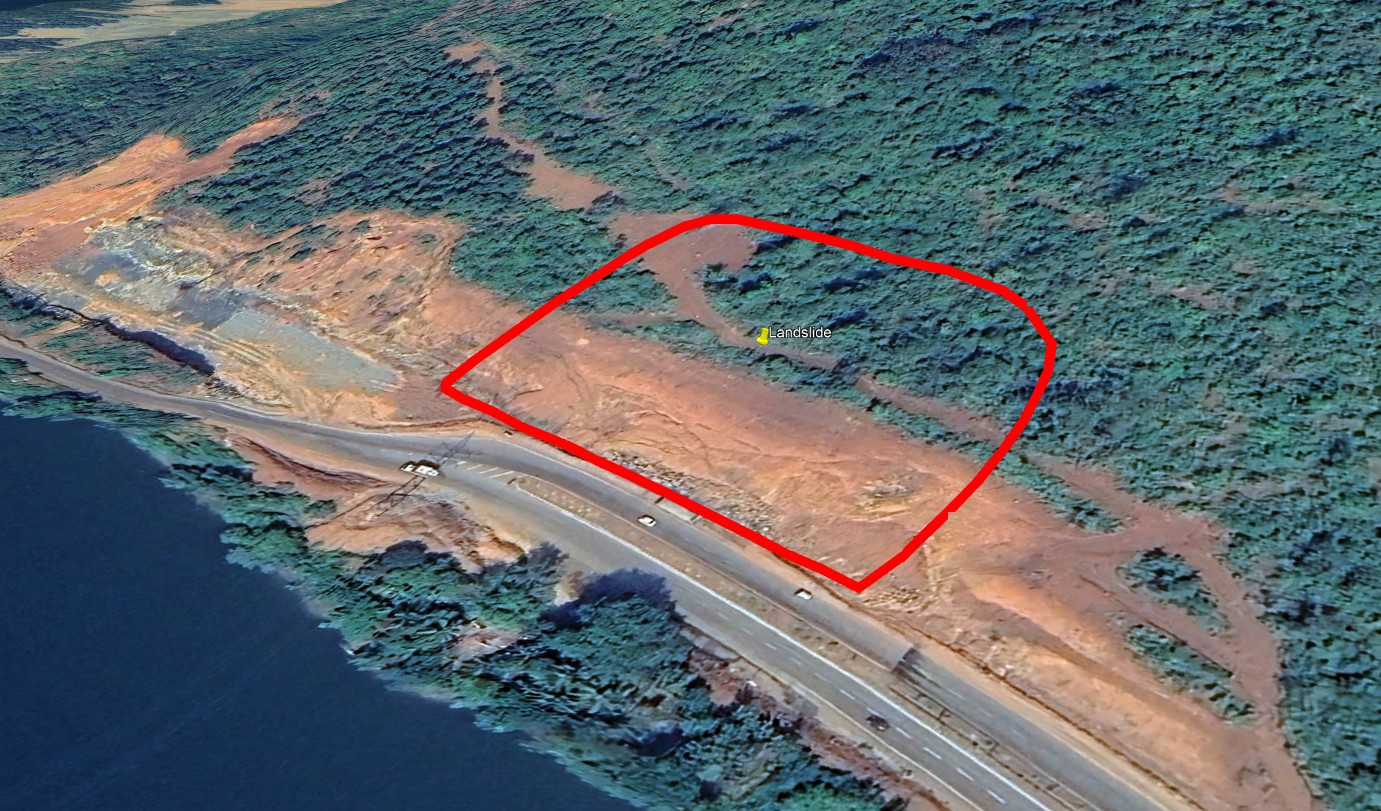
On 25 April 2024, a massive landslide struck the village of Pernote along the Ramban–Gool road in Ramban District, Jammu and Kashmir. The event began with ground cracks at ~4 pm, followed by major slope displacement by 11 pm. The failure was a rotational debris slide involving mud, silt, clay, and rock fragments, transitioning into debris flow. The landslide extended ~1250 m from crown (1140 m) to toe (650 m) into the Chenab River, with a total width ~800 m and depth ranging 10–30 m with average depth of ~ 12m. Approximately 0.60 km² of the area was affected. Antecedent rainfall of 100–175 mm over 5 days saturated the slope-forming debris, reducing shear strength and triggering failure along pre-existing thrust planes and fissures. Damage included destruction of ~55 houses, collapse of four electricity towers, heavy damage to Ramban–Gool road (~800 m), and disruption of water supply pipelines. About ~500 residents were evacuated during landslide activity by the authorities. Precursor features such as cracks, bulges, and fissures were detected in field surveys in 2021, providing early warning signs of slope instability. This event illustrates the combined role of geology, rainfall, and human activity in slope destabilization, highlighting the need for early warning systems, slope stabilization, and sustainable land use in the Ramban sector of the Himalayas.

The Deadliest Single Landslide in Vietnam, 2020

LCI : VNM202509011830
Main Information
Landslide Name : The Deadliest Single Landslide in Vietnam, 2020
Latitude : 16:43:19.89 N
Longitude : 106:38:26.87 E
Location
City / District : Huong Hoa
Province : Quang Tri
Country : Việt Nam
Reporter
Reporter 1 : Pham Tien
Reporter 2 : Tien Van
Landslide Type
Material : Debris, Earth
Movement : Slide, Flow
Velocity (mm/sec) : Extremely Rapid
Depth (m) : Moderate-Shallow
Slope (degree) : Moderate
Volume (m³) : Large-Moderate
Date of Occurence
Date of Occurence : Oct 18, 2020
Other Information
Land Use Source area : Forest
Run-out/deposition area : Human settlement, Road
Other Activity : Active in the past
Triggering Factor : Rainfall
Death(s) & Missing : 22
Houses and other structural damage : -
Photo of landslide :
Google earth kmz file : The 2020 Deadliest Single Landslide in Vietnam.kmz
Plan of landslide :
Cross section of landslide :
Reference (paper/report) : https://link.springer.com/article/10.1007/s10346-021-01664-y
Testing graph : -
Monitoring graph : -
Video of moving landslides including 3D simulation : -
Description :

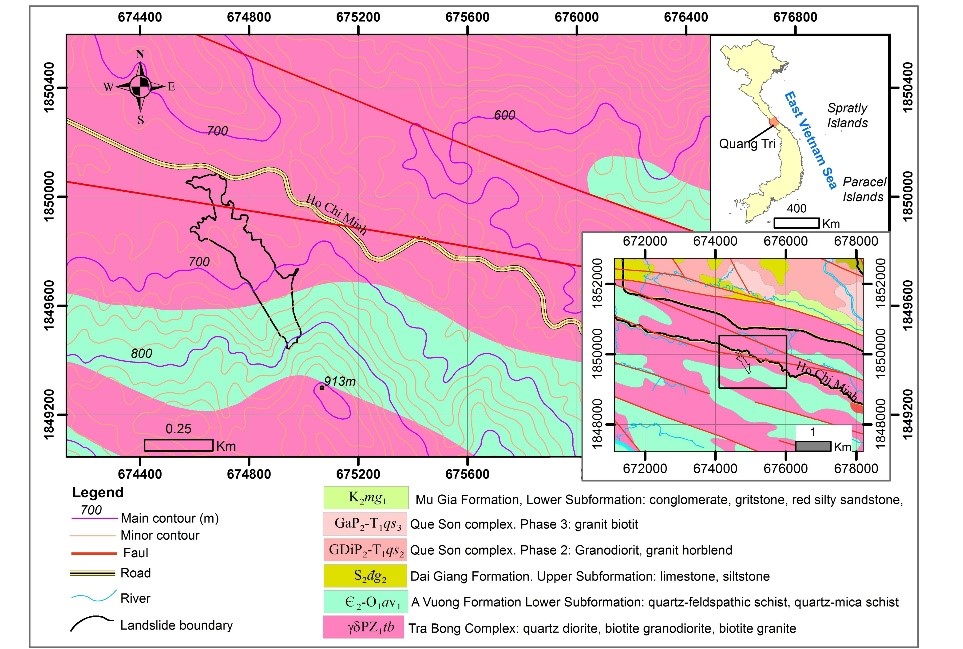
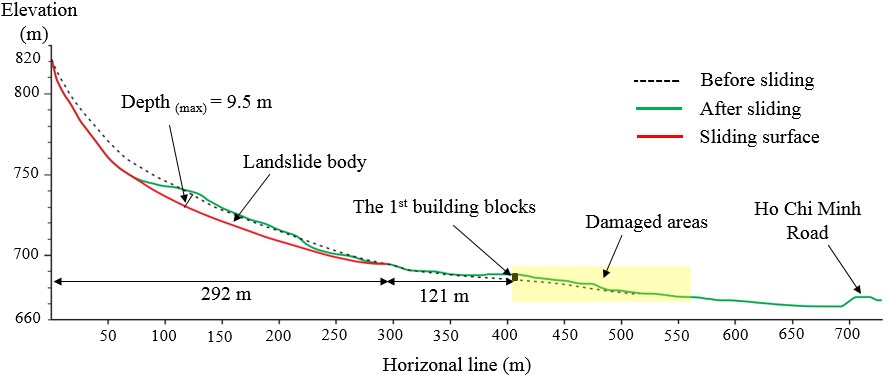
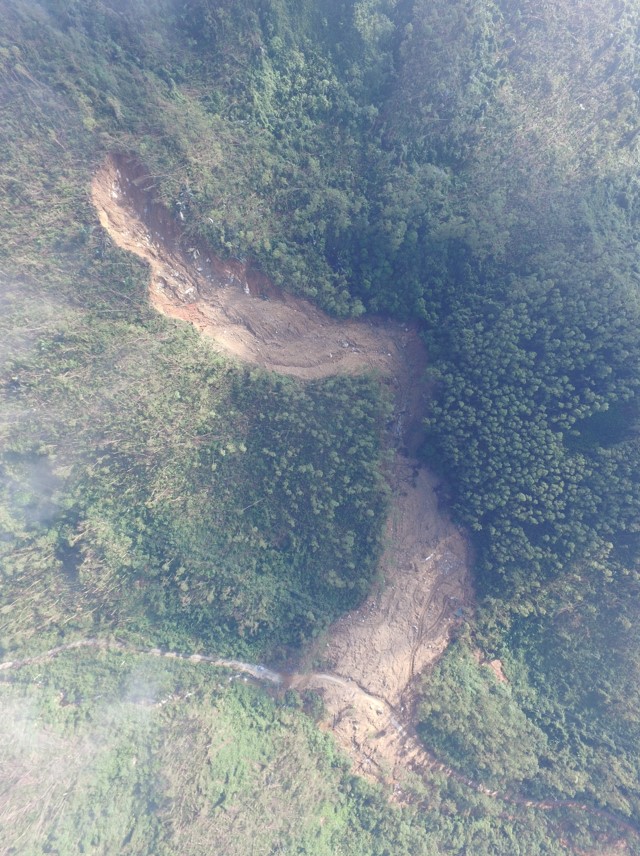
At 1:05 AM on Sunday, 18 October 2020, a rapid long-travelling landslide induced by heavy rainfall struck a military barracks in Huong Phung commune, Huong Hoa district, Quang Tri province, Vietnam, killing 22 soldiers. The landslide mass originated from the hilltop, moving downslope and completely burying four buildings while partially damaging three others along its path. According to a survivor’s account, the event was preceded by a loud noise resembling a ground explosion, and the landslide reached the barracks within approximately ten seconds, where 29 people were present at the time. Analysis indicates that the failure developed on the slope of an ancient landslide terrain strongly influenced by tectonic faults. The extreme cumulative rainfall over a prolonged period was the critical triggering factor, while geological and morphological conditions acted as the main preparatory causes. The event was characterized by a rapid, flow-like movement with exceptionally high mobility.

The 13 October 2020 Ranger Station-7 Landslide

LCI : VNM202509011810
Main Information
Landslide Name : The 13 October 2020 Ranger Station-7 Landslide
Latitude : 16:25:59.65 N
Longitude : 107:18:38.61 E
Location
City / District : Phong Xuan
Province : Thua Thien Hue
Country : Việt Nam
Reporter
Reporter 1 : Pham Tien
Reporter 2 : Tien Van
Landslide Type
Material : Debris
Movement : Slide
Velocity (mm/sec) : Extremely Rapid
Depth (m) : Moderate-Shallow
Slope (degree) : Moderate
Volume (m³) : Moderate-Small
Date of Occurence
Date of Occurence : Oct 13, 2020
Other Information
Land Use Source area : Forest
Run-out/deposition area : Road
Other Activity : Active in the past
Triggering Factor : Rainfall
Death(s) & Missing : 13
Houses and other structural damage : 1
Photo of landslide :
Google earth kmz file : Ranger Station-7 Landslide.kmz
Plan of landslide :
Cross section of landslide :
Reference (paper/report) : https://link.springer.com/article/10.1007/s10346-021-01663-z
Testing graph : -
Monitoring graph : -
Video of moving landslides including 3D simulation : -
Description :

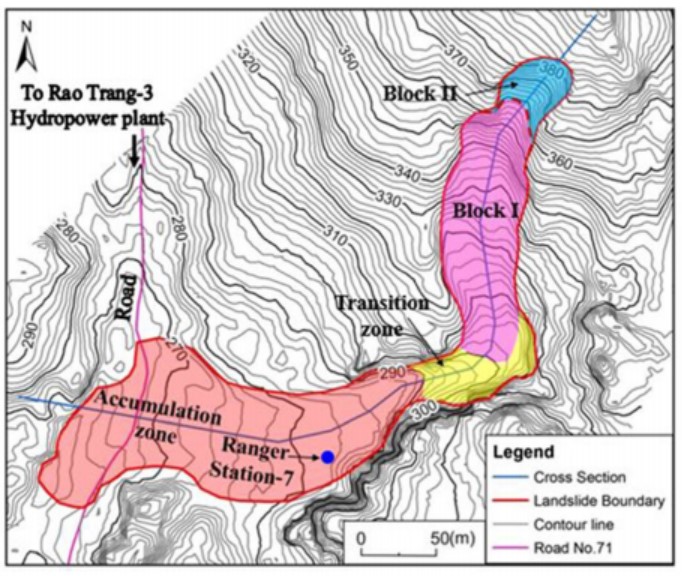
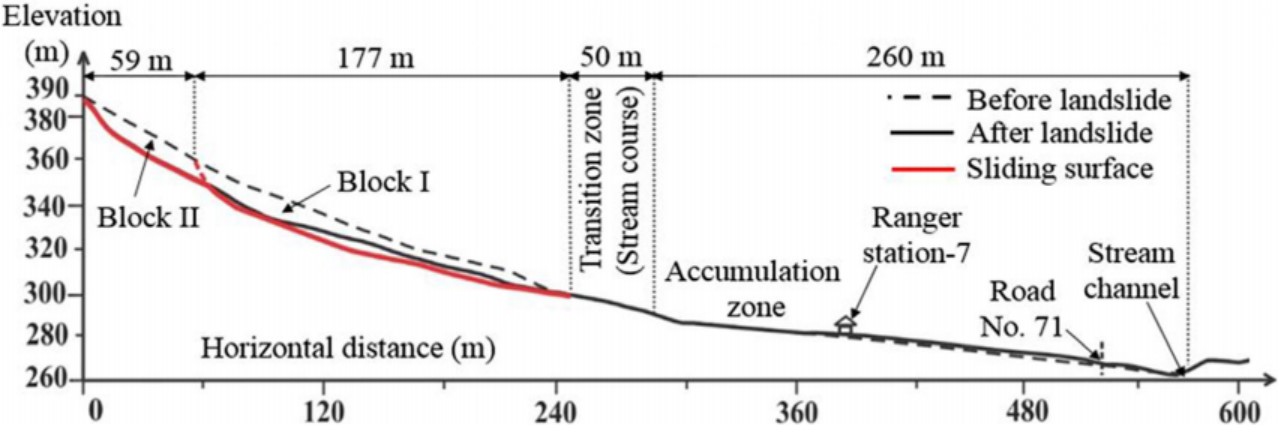
At approximately 0:00 AM on 13 October 2020, a rapid rainfall-induced landslide occurred in Phong Xuan commune, Phong Dien district, Thua Thien Hue province, sweeping over Ranger Station No. 7 and claiming the lives of 13 rescue team members, including 11 army officers and 2 district officials. Field evidence and topographic analysis indicate that the Ranger Station No. 7 landslide involved an estimated volume of about 81,550 m³, comprising two distinct blocks in the lower and upper slope parts. The failure initiated in the lower slope section, accompanied by a loud sound, which subsequently triggered the collapse of the upper part. The 13 October event was associated with extreme rainfall, with a cumulative amount of 2,190.2 mm recorded at the A Luoi rainfall station between 6 and 12 October. The landslide mass rapidly moved downslope, destroying the ranger station located 145 m from the landslide toe. The displaced materials not only accumulated on the rupture surface but also extended beyond the toe, spreading into the stream channel and covering a flat downslope area of approximately 2.25 ha.

Lang Nu

LCI : VNM20250830
Main Information
Landslide Name : Lang Nu
Latitude : 22:7:12.85 N
Longitude : 104:31:39.85 E
Location
City / District : Bao Yen
Province : Lao Cai
Country : Việt Nam
Reporter
Reporter 1 : Pham Tien
Reporter 2 : Van Tien Pham
Landslide Type
Material : Rock, Debris
Movement : Slide, Flow
Velocity (mm/sec) : Extremely Rapid
Depth (m) : Deep-Moderate
Slope (degree) : Moderate
Volume (m³) : Large
Date of Occurence
Date of Occurence : Sep 10, 2024
Other Information
Land Use Source area : Forest
Run-out/deposition area : Human settlement
Other Activity : Currently active
Triggering Factor : Rainfall
Death(s) & Missing : 67
Houses and other structural damage : 40
Photo of landslide : -
Google earth kmz file : Lang Nu landslide.kmz
Plan of landslide : -
Cross section of landslide :
Reference (paper/report) : https://link.springer.com/article/10.1007/s10346-025-02490-2
Testing graph : -
Monitoring graph : -
Video of moving landslides including 3D simulation : -
Description :

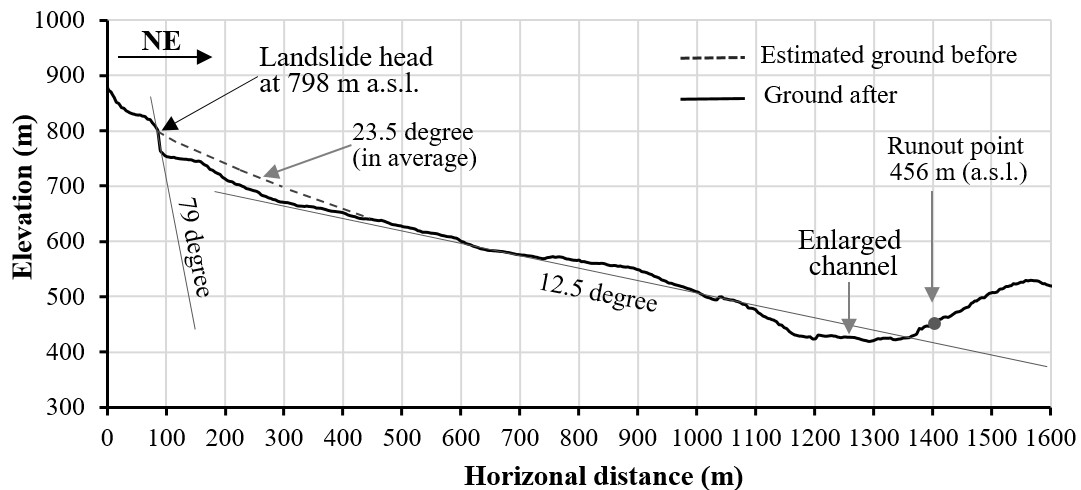
At around 5:55 AM (local time, GMT+7) on 10 September 2024, a rapid, long-runout landslide induced by prolonged heavy rainfall struck Lang Nu hamlet, Phuc Khanh commune, Bao Yen district, Lao Cai province, Vietnam, resulting in 67 fatalities. The analysis results show that the Lang Nu event was a large-scale rockslide on the slope of Con Voi Mountain, involving an estimated volume of approximately 1.1 million cubic meters. The failure developed along foliation and fault planes dipping northeast, following the dip direction of the strata. The foliated, fractured, and sheared schistose rock mass acted as the primary preparatory condition for slope instability. The immediate triggering factor was the extreme rainfall event, with a cumulative total of 356.6 mm over 55 hours. Under the local geological setting of the source area, groundwater rise and hydrostatic pressure buildup during intense rainfall likely drove the slope failure. The calculated reach angle of 11.6° reflects the high mobility of the landslide, which caused rapid, long-distance movement and catastrophic destruction. Importantly, no field evidence suggested the formation of landslide-dammed lakes that might have generated secondary hazards such as dam breach and outburst flooding in Lang Nu hamlet. The Lang Nu landslide was the deadliest landslide disaster in Vietnam’s recent history and may be regarded as the most catastrophic natural landslide ever recorded in the country, leaving the entire nation in shock.

Muriwai landslide

LCI : LCI_AKL2
Main Information
Landslide Name : Muriwai landslide
Latitude : 34:49:18.71 S
Longitude : 174:26:28.03 E
Location
City / District : Muriwai
Province : Auckland
Country : New Zealand
Reporter
Reporter 1 : Martin Brook
Reporter 2 :
Landslide Type
Material : Complex
Movement : Complex
Velocity (mm/sec) : Extremely Rapid
Depth (m) : Shallow
Slope (degree) : Steep
Volume (m³) : Moderate-Small
Date of Occurence
Date of Occurence : Feb 13, 2023
Other Information
Land Use Source area : Human settlement
Run-out/deposition area : Human settlement
Other Activity : Unknown
Triggering Factor : Rainfall
Death(s) & Missing : 2
Houses and other structural damage : 5
Photo of landslide : -
Google earth kmz file : Muriwai landslide.kmz
Plan of landslide :
Cross section of landslide :
Reference (paper/report) : Brook, M.S., Nicoll, C. Brief report of fatal rainfall-triggered landslides from record-breaking 2023 storms in Auckland, New Zealand. Landslides 21, 1581–1589 (2024). https://doi.org/10.1007/s10346-024-02258-0
Testing graph : -
Monitoring graph : -
Video of moving landslides including 3D simulation : -
Description :

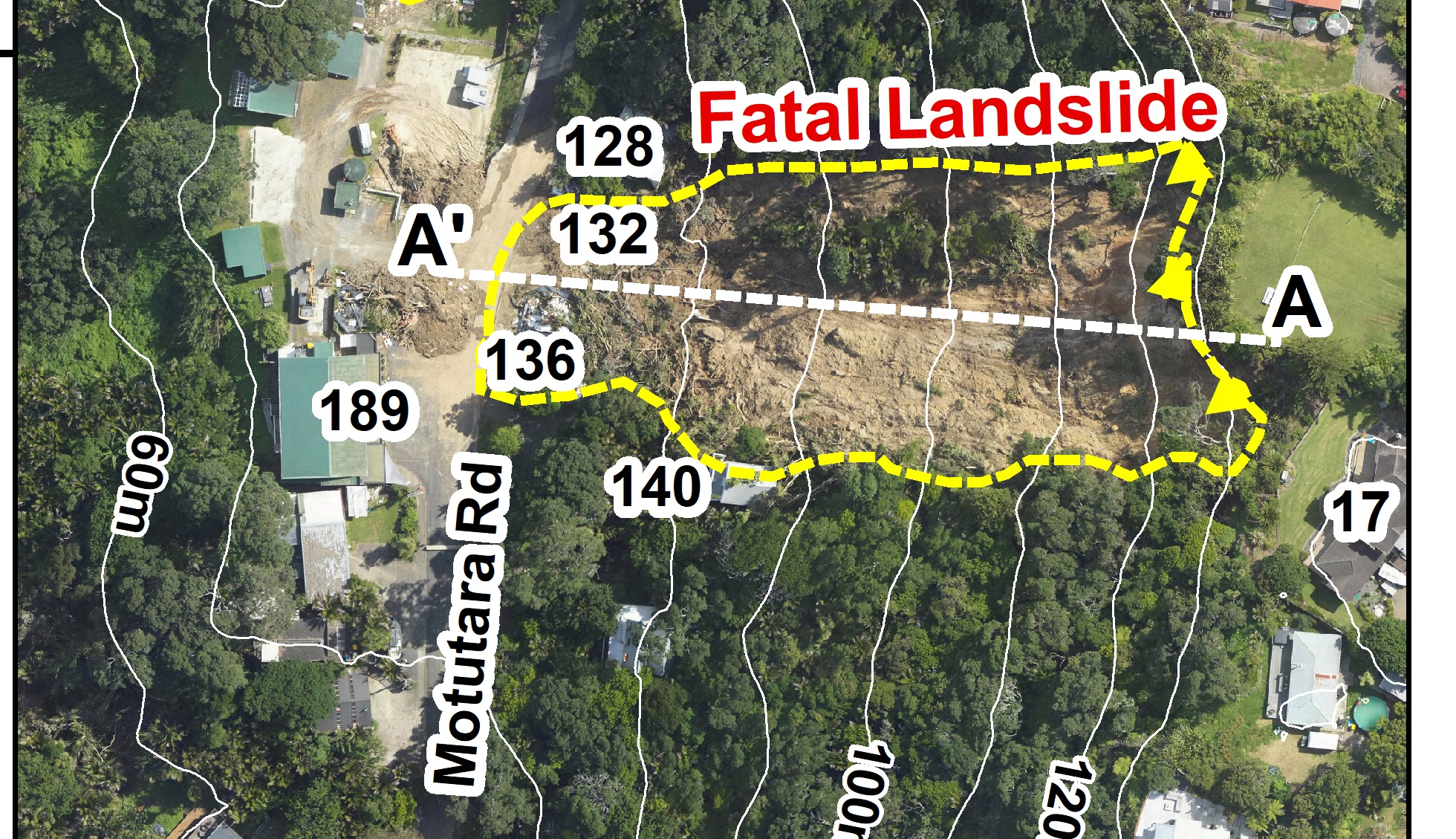
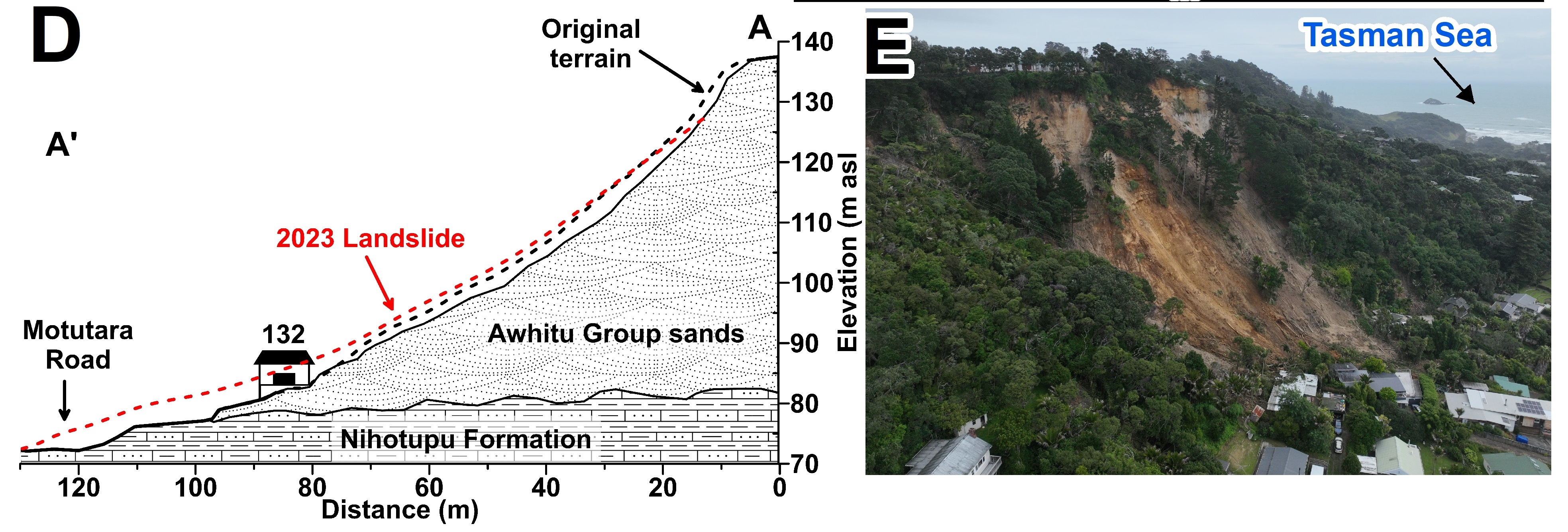
With January 2023 Auckland’s wettest January on record, and with the region still in a state of emergency, Tropical Cyclone Gabrielle crossed the region on February 13–14. This caused widespread landsliding, including a fatal landslide at Muriwai on the west Auckland coast. Fatal landslides from the same escarpment had occurred in 1965, close to the February 13, 2023, fatal landslide. The tragic deaths of the two firefighters occurred during inspection of a house on Motutara Road around 10 pm on February 13. Muriwai is an interesting location because much of the town lies below a ~80-m high escarpment formed within soft, Pleistocene Awhitu Group sands. These are poorly-cemented dune sands and silts. In situ, the Awhitu Group sands have a tendency to dilate when wetted but are firm to stiff (Su ~100 kPa) and can sustain steep (~40°) slopes in drained conditions. However, the crenulated ridgeline immediately west of Oaia Road indicates that several landslides have occurred in the past along the escarpment above the town. Indeed, in August 1965, 2 fatal landslides occurred on consecutive days at Domain Crescent, in the form of slides that transitioned to rapid (90 km/h) flows, which inundated houses, following substantial (220 mm) rainfall (Wright 1966). While landslides from TC Gabrielle did inundate the Domain Crescent houses that were rebuilt after the 1965 fatal landslides, Domain Crescent was evacuated during TC Gabrielle on February 13 at 9–10 pm. At Motutara Road in 2023, as with Domain Crescent in 1965, the Awhitu Group sands unconformably overly the relatively impermeable Nihotupu Formation volcaniclastic sediments of the Miocene Waitakere Group. Groundwater tends to flow downwards through the permeable Awhitu Group dune sands, until it reaches the erosional contact with the underlying Waitakere Group Nihotupu Formation, which acts as an aquiclude, increasing porewater pressure within the overlying Awhitu Group. During the passage of TC Gabrielle, landslides in the Awhitu Group occurred at several places along the escarpment, inundating houses below, but the fatalities were limited to 132–136 Motutara Road. The landslide there was initiated in the slope above the evacuated house at ~130 m asl (Fahrböschung angle = 26°), which inundated the house, while firefighters were digging a trench to divert floodwater. The inundated house was transported by the landslide into the roadway below, while further landslides occurred nearby. One firefighter died at the scene, while a second (rescued) firefighter died in hospital on February 16.

Shore Road landslide

LCI : LCI_AKL_1
Main Information
Landslide Name : Shore Road landslide
Latitude : 36:51:55.6 S
Longitude : 174:47:30.78 E
Location
City / District : Auckland
Province : Auckland
Country : New Zealand
Reporter
Reporter 1 : Martin Brook
Reporter 2 :
Landslide Type
Material : Rock, Earth
Movement : Slide
Velocity (mm/sec) : Extremely Rapid
Depth (m) : Shallow
Slope (degree) : Steep
Volume (m³) : Small
Date of Occurence
Date of Occurence : Jan 27, 2023
Other Information
Land Use Source area : Urban area
Run-out/deposition area : Urban area
Other Activity : Unknown
Triggering Factor : Rainfall
Death(s) & Missing : 1
Houses and other structural damage : 4
Photo of landslide : -
Google earth kmz file : Shore Rd landslide.kmz
Plan of landslide :
Cross section of landslide :
Reference (paper/report) : Brook, M.S., Nicoll, C. Brief report of fatal rainfall-triggered landslides from record-breaking 2023 storms in Auckland, New Zealand. Landslides 21, 1581–1589 (2024). https://doi.org/10.1007/s10346-024-02258-0
Testing graph : -
Monitoring graph : -
Video of moving landslides including 3D simulation : -
Description :

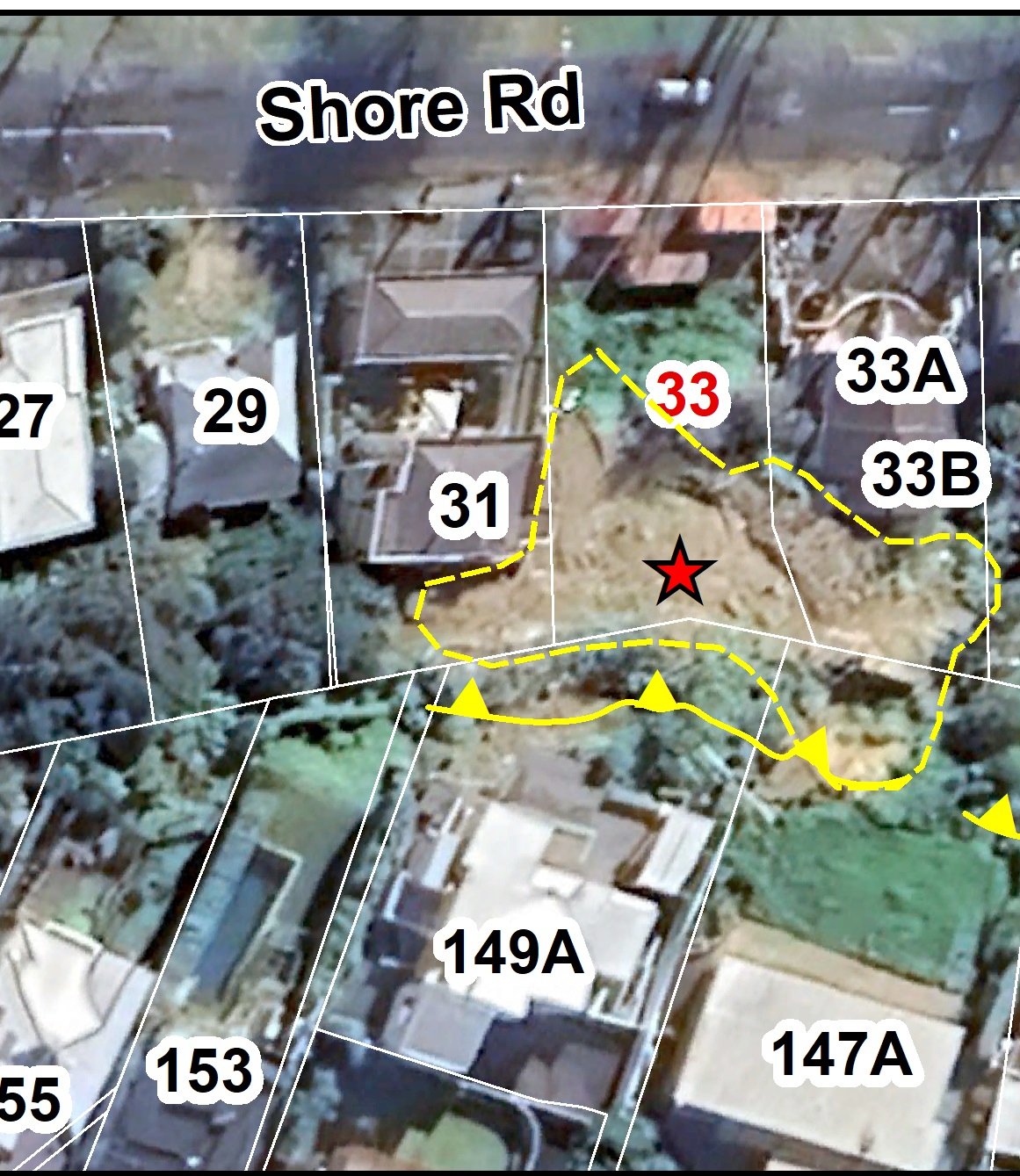
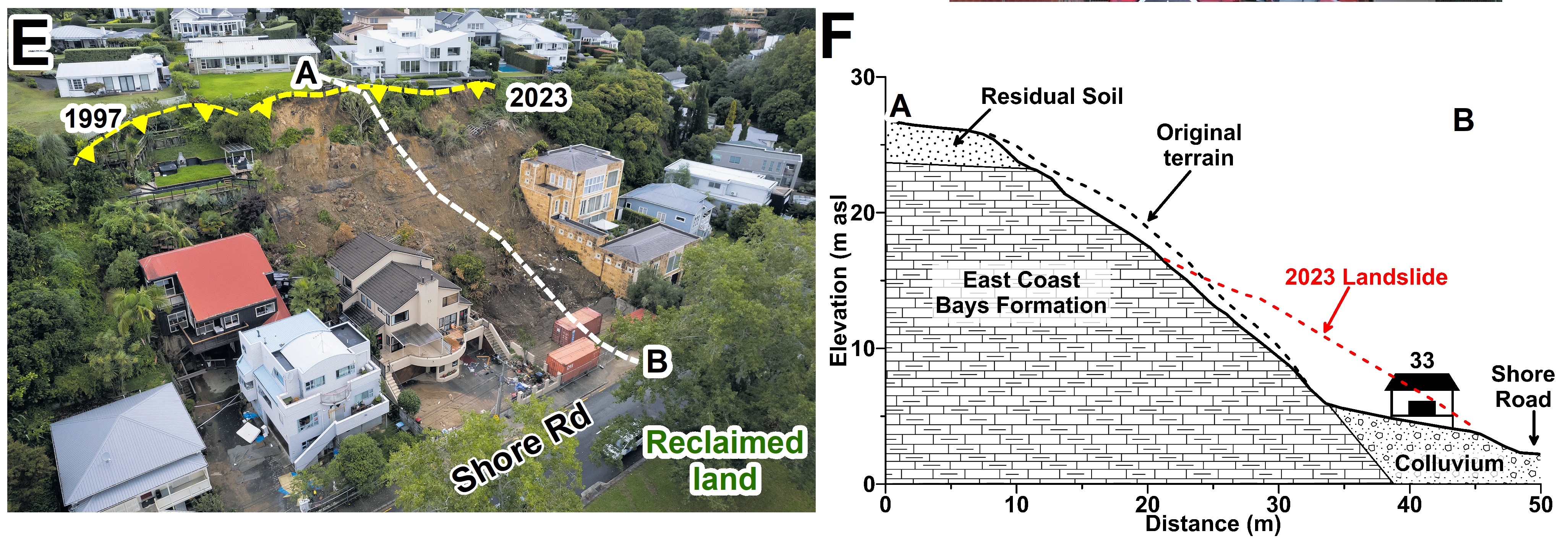
The 2023 January 27 Auckland Anniversary storm was from an “atmospheric river,” dumping Summer’s worth of rain (265 mm) in one day. This was the highest 24-h total on record, estimated a 1 in 200-year event. The peak 2-min rainfall in Māngere close to Auckland Airport was 4.2 mm (24-h total of 265 mm), causing flash flooding around 5 pm, and cancelation of the Elton John rock concert, leaving many people stranded near the Mt Smart stadium venue. The storm meant that January 2023 was the wettest month ever (539 mm) in central Auckland, easily exceeding the previous record of 420 mm in February 1869 (NIWA 2023). This led to widespread landsliding throughout Auckland, including a fatal landslide in Parnell, central Auckland. Notably, this occurred only meters from a similarly destructive landslide in 1997. At Parnell in central Auckland, a fatal landslide occurred at 33 Shore Road. This was a slump within the upper cliff, formed of Waitemata Group East Coast Bay Formation residual soil and weathered rock. Following the classification of Hungr et al. (2014), this was probably initiated as a clay/silt rotational slide that transitioned downslope into an earthflow, with a Fahrböschung angle of ~32°. This landslide inundated the house below, which had been constructed, in part, on colluvium formed from prior slope failures, and extended onto Shore Road itself

San Felice a Cancello post-fire debris flow

LCI : .
Main Information
Landslide Name : San Felice a Cancello post-fire debris flow
Latitude : 41:0:9.69 N
Longitude : 14:30:34.74 E
Location
City / District : San Felice a Cancello
Province : Campania
Country : Italy
Reporter
Reporter 1 : Stefano Luigi Gariano
Reporter 2 : Giuseppe Esposito
Landslide Type
Material : Debris
Movement : Flow
Velocity (mm/sec) : Extremely Rapid
Depth (m) : Surficial
Slope (degree) : Steep
Volume (m³) : Small
Date of Occurence
Date of Occurence : Aug 27, 2024
Other Information
Land Use Source area : Forest, Pasture
Run-out/deposition area : Urban area, Road
Other Activity : Active in the past
Triggering Factor : Rainfall
Death(s) & Missing : 2
Houses and other structural damage : extensive damage to the road network, and the ground and basement floors of many buildings
Photo of landslide :
Google earth kmz file : watershed.kmz
Plan of landslide : -
Cross section of landslide :
Reference (paper/report) : Esposito, G., Gariano, S. Overview of the first fatal post-fire debris flow event recorded in Italy. Landslides 22, 2131–2139 (2025). https://doi.org/10.1007/s10346-025-02516-
Testing graph : -
Monitoring graph : -
Video of moving landslides including 3D simulation : https://www.youtube.com/watch?v=QW8_3lo03yI
Description :

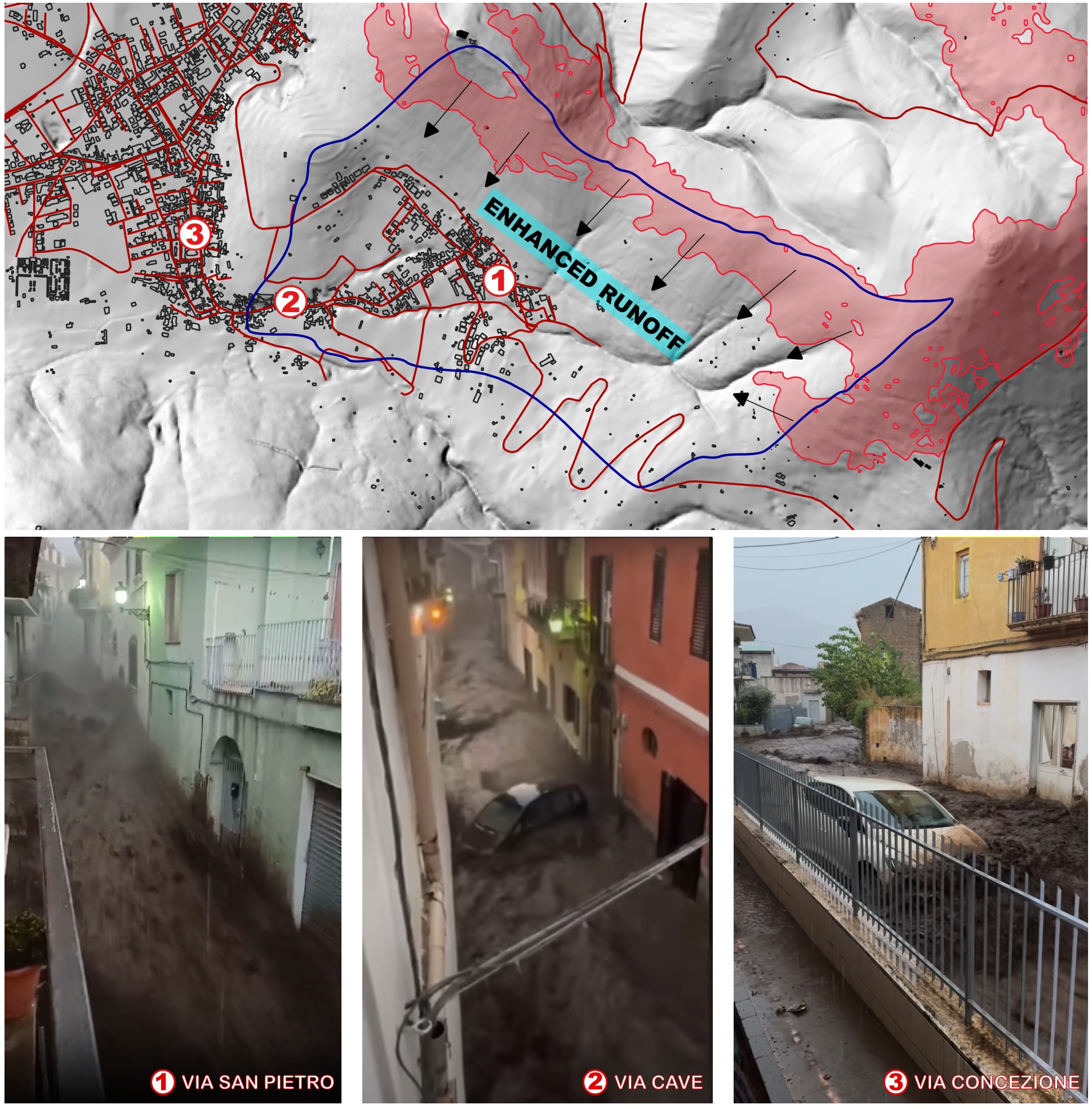
On 27 August 2024, a large part of the Campania region, southern Italy, was affected by intense rainfall associated with forming local storm cells forced by orography. Three watersheds affected by wildfires some weeks before (3 and 14 August 2024) responded to rainfall with intense runoff and erosion processes supplying debris and hyperconcentrated flows downstream. In the town of San Felice a Cancello, a post-fire debris flow hit the urban fabric causing extensive damage to the road network, and the ground and basement floors of many buildings. The closest rain gauge recorded 29.2 mm in 20 min, as well as a peak intensity in 30 min of 83.6 mm/h. The highest peak intensity in 10 min was 106.8 mm/h. Landforms related to gully erosion generated by the runoff concentration were observed in the highest part of low-order channels, likely associated with rill and interrill erosion processes. A lot of sediments resulted from the incision of steep drainage channels and was carried out by turbulent flows. When hitting the urban fabric, flows poured down very fast along the roads and changed their rheology gradually along their paths downstream, transitioning from high-magnitude debris flows through to hyperconcentrated flows. Due to high sediment concentrations and human modifications of the drainage sections, the flows abandoned the natural drainage network to overwhelm roads and buildings. In the urban center of San Felice a Cancello, a vehicle with two people on board was dragged by flows for about 800 m. The vehicle was found a few hours after the accident. The two lifeless bodies were found only after long searches in a former quarry 2 km away from the impact point on 2 and 12 of September, respectively. This was the first known post-fire debris flow with fatal consequences in Italy.

Bulambuli Landslide

LCI : UGN2711241900
Main Information
Landslide Name : Bulambuli Landslide
Latitude : 1:12:47.88 N
Longitude : 34:21:59.4 E
Location
City / District : Bulambuli
Province : Eastern Region
Country : Uganda
Reporter
Reporter 1 : Mohammed Abdulahi
Reporter 2 : Pascal Egli
Landslide Type
Material : Complex
Movement : Flow
Velocity (mm/sec) : Very Rapid
Depth (m) : Shallow
Slope (degree) : Very steep
Volume (m³) : Large
Date of Occurence
Date of Occurence : Nov 27, 2024
Other Information
Land Use Source area : Farming, Pasture
Run-out/deposition area : Forest, Farming, Human settlement, Road
Other Activity : Active in the past
Triggering Factor : Human activity and rainfall
Death(s) & Missing : 55 and 95
Houses and other structural damage : 150+ houses and roads
Photo of landslide :
Google earth kmz file : Bulambuli Landslide.kmz
Plan of landslide :
Cross section of landslide :
Reference (paper/report) : 1. https://en.wikipedia.org/wiki/2024_Ugandan_landslides 2. https://go.ifrc.org/field-reports/17397
Testing graph :
Monitoring graph :
Video of moving landslides including 3D simulation : -
Description :

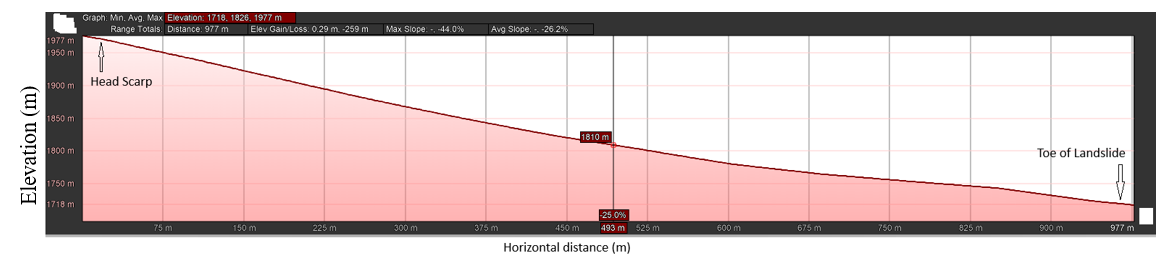
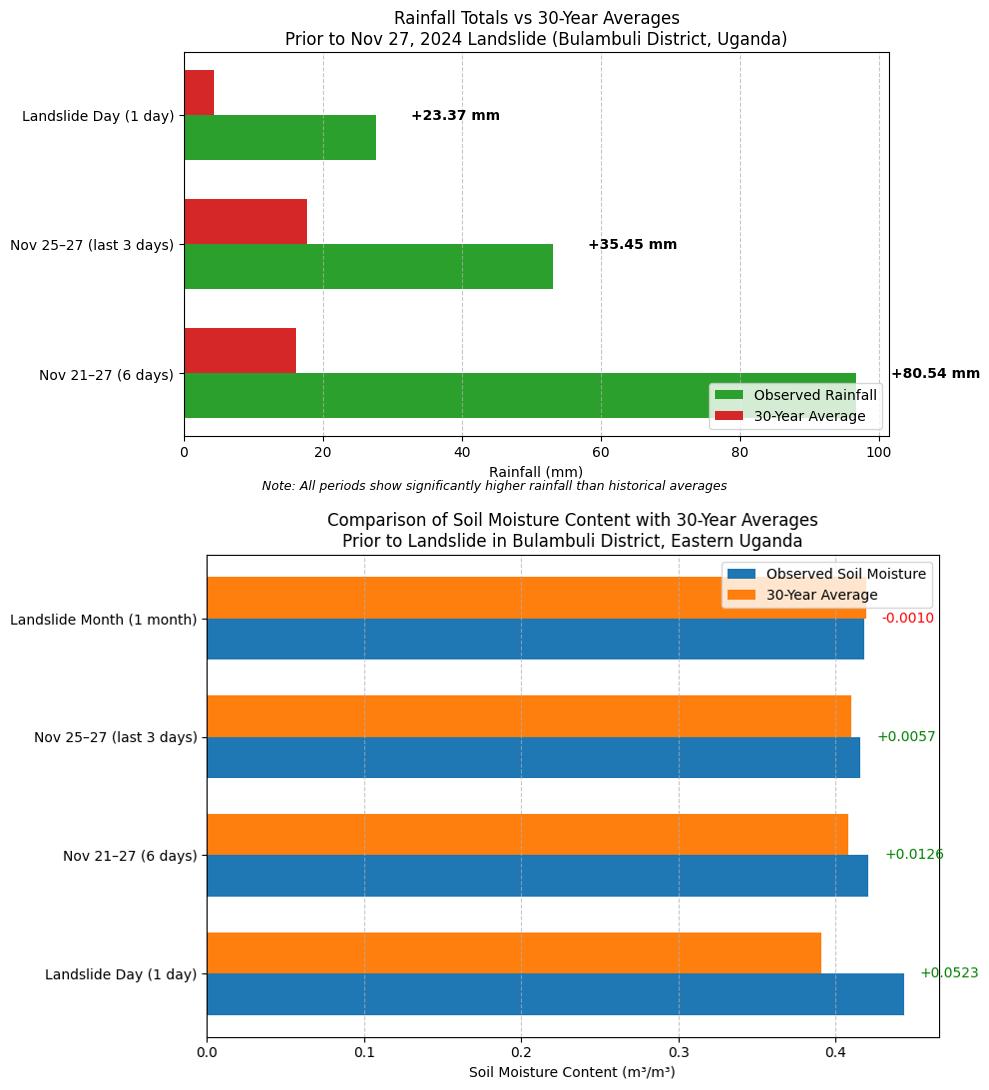
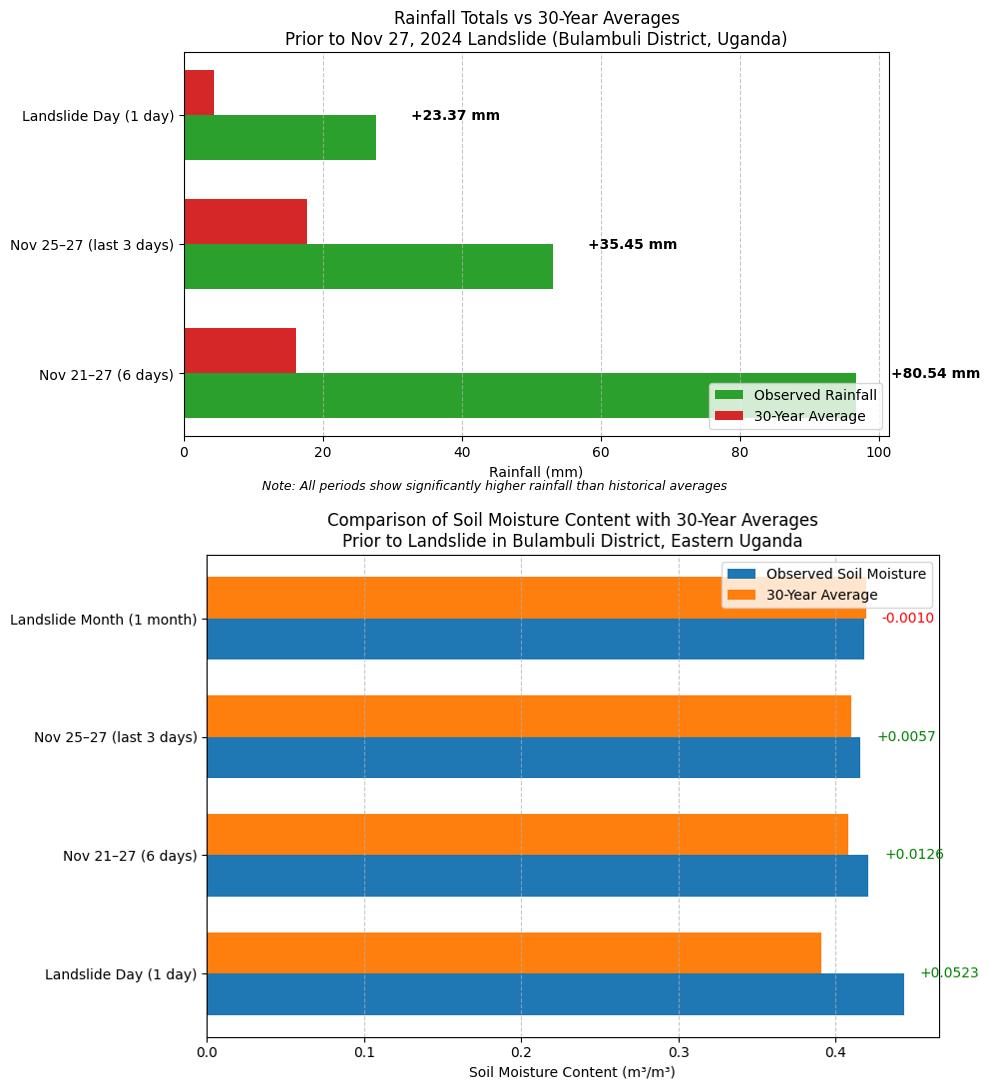
The Bulambuli landslide occurred on the evening of 27 November 2024, between 7:00 and 9:00 PM, in Masugu village, Buluganya Sub-County, Bulambuli District, Eastern Uganda, at coordinates 1°12′47.88″N and 34°21′59.4″E. It was triggered by heavy and continuous rainfall that lasted from 11:00 AM to 7:00 PM. The saturated soil eventually lost stability, leading to a sudden slope failure. Human activities, such as land use changes, may have increased the area’s vulnerability. This landslide was a fast-moving flow-type landslide involving a mix of soil, rocks, and debris. The movement started in upland areas that were farmed, and grazed, and descended into residential zones, roads, and farmlands, leaving destruction along its path. Although the landslide was relatively shallow, its speed, volume, and the steepness of the terrain made it particularly destructive. This district has a known history of landslides, highlighting its ongoing exposure to such hazards. The impact on both people and infrastructure was severe. Approximately 150 people died, and 95 more were still missing by early December. Over 30,000 individuals were affected, with around 2,023 households, about 12,138 people, displaced. More than 150 homes were destroyed, and critical roads, farmland, livestock, and community infrastructure were buried under debris. Beyond the physical damage, the disaster left deep emotional and psychological wounds. Many survivors suffered from trauma, grief, and feelings of isolation especially those who lost multiple family members. One person reported losing eleven relatives. These experiences show the urgent need for comprehensive support after the disaster, including mental health care and long-term community recovery services. Source: Abdulahi, M., Egli, P., Nakakaawa-Jjunju, C., Opach, T., Bamutez, Y., Nakileza, B., & Naboth, M. (in preparation). Landslides triggered by the November 27, 2024, heavy rainfall in the Bulambuli District, Eastern Region, Uganda [Unpublished manuscript].

Shirur Landslide

LCI : IND2515051230
Main Information
Landslide Name : Shirur Landslide
Latitude : 14:36:13 N
Longitude : 74:22:15 E
Location
City / District : Uttara Kannada
Province : Karnataka
Country : India
Reporter
Reporter 1 : Priyajit Kundu
Reporter 2 : Varun Menon
Landslide Type
Material : Rock, Debris, Earth, Complex
Movement : Slide
Velocity (mm/sec) : Extremely Rapid
Depth (m) : Deep-Moderate
Slope (degree) : Moderate
Volume (m³) : Moderate-Small
Date of Occurence
Date of Occurence : Jul 16, 2024
Other Information
Land Use Source area : Forest, Wildland, Road
Run-out/deposition area : Human settlement, Road, River
Other Activity : Unknown
Triggering Factor : Human activity and rainfall
Death(s) & Missing : 8
Houses and other structural damage : 1 local shop and Electricity tower was washed away into river
Photo of landslide : -
Google earth kmz file : shirur landslide.jpg
Plan of landslide :
Cross section of landslide : -
Reference (paper/report) : https://doi.org/10.1016/j.nhres.2025.01.005
Testing graph : -
Monitoring graph : -
Video of moving landslides including 3D simulation : -
Description :

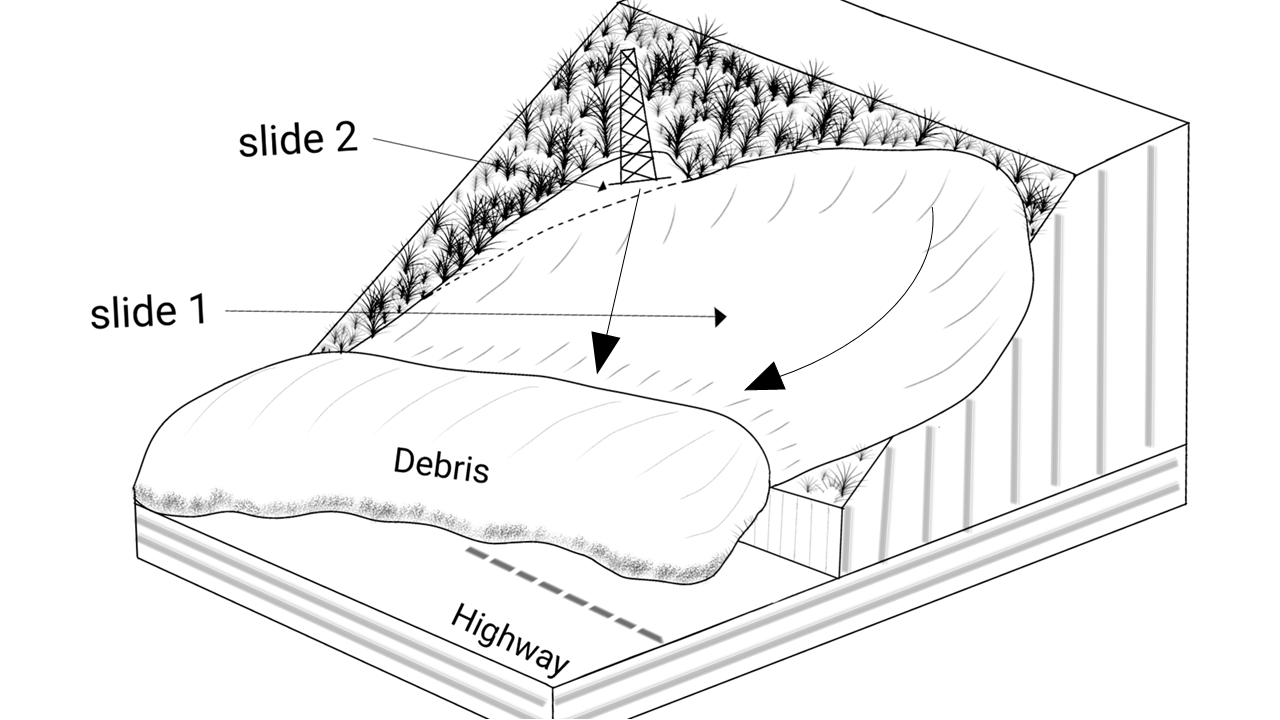
At 08:15 hours on 16 July 2024, a two-stage slope failure struck the northern embankment of National Highway 66 at Shirur village, Uttara Kannada, Karnataka. The first stage was a rotational slip with an arcuate failure surface about 60 m in radius, detached a soil block up to 28 m deep. According to field mapping and DEM analysis, the displaced volume is approximately 89000 m³. The base of an electric tower was crossed by the slip surface. The tower collapsed with a second small-scale slope failure due to a loss of support. Mobilised debris, a mix of silty sand, clay and scattered boulders, travelled across both lanes of the highway, burying vehicles and cutting traffic. Momentum carried the flow another 180 m into the adjoining Gangavali River, where it formed an elongate deposition bar that briefly obstructed the channel and generated a splash wave, damaging the opposite bank. The landslide took 8 lives of the people residing in the shop nearby, along with trucks and the driver who parked their vehicles in the location. Landslide was predominantly triggered by heavy rainfall (recorded value of 260mm in a neighbouring rain gauge) and anthropogenic activity like unprotected vertical cuts on the slope while widening the road.

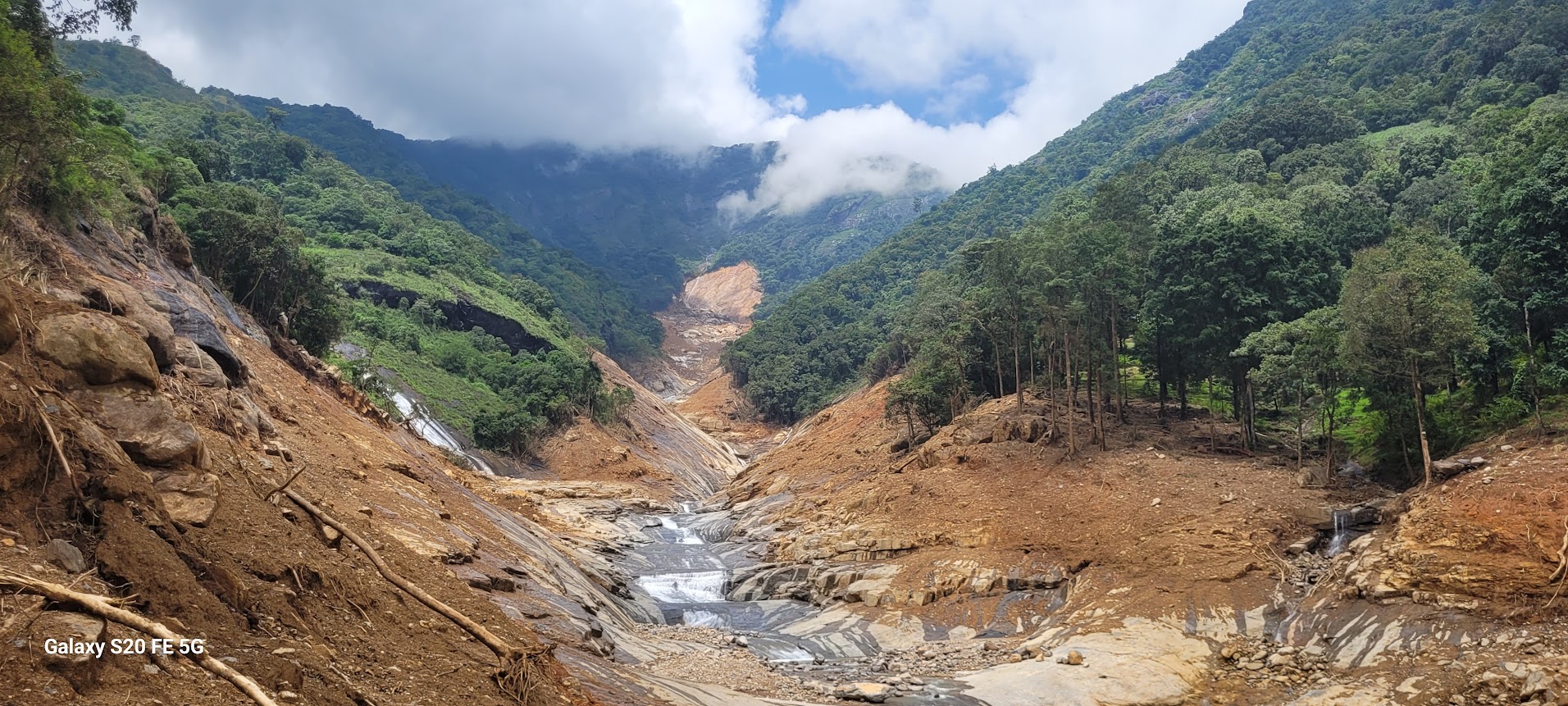
Mundakkai Landslide, Wayanad

LCI : IND2516051200
Main Information
Landslide Name : Mundakkai Landslide, Wayanad
Latitude : 11:27:52.5 N
Longitude : 76:8:5.2 E
Location
City / District : Wayanad
Province : Kerala
Country : India
Reporter
Reporter 1 : Sreevalsa Kolathayar
Reporter 2 :
Landslide Type
Material : Rock, Debris, Earth, Complex
Movement : Flow
Velocity (mm/sec) : Extremely Rapid
Depth (m) : Deep-Moderate
Slope (degree) : Very steep
Volume (m³) : Large
Date of Occurence
Date of Occurence : Jul 30, 2024
Other Information
Land Use Source area : Forest
Run-out/deposition area : Forest, Farming, Human settlement, Road
Other Activity : Unknown
Triggering Factor : Rainfall
Death(s) & Missing : 251 death & 47 missing
Houses and other structural damage : Over 200 buildings were washed away, and over 400 were damaged partially or fully
Photo of landslide :
Google earth kmz file : Mundakkai Landslide 2024.kmz
Plan of landslide : -
Cross section of landslide :
Reference (paper/report) : https://link.springer.com/10.1007/s10346-024-02443-1
Testing graph : -
Monitoring graph : -
Video of moving landslides including 3D simulation : -
Description :

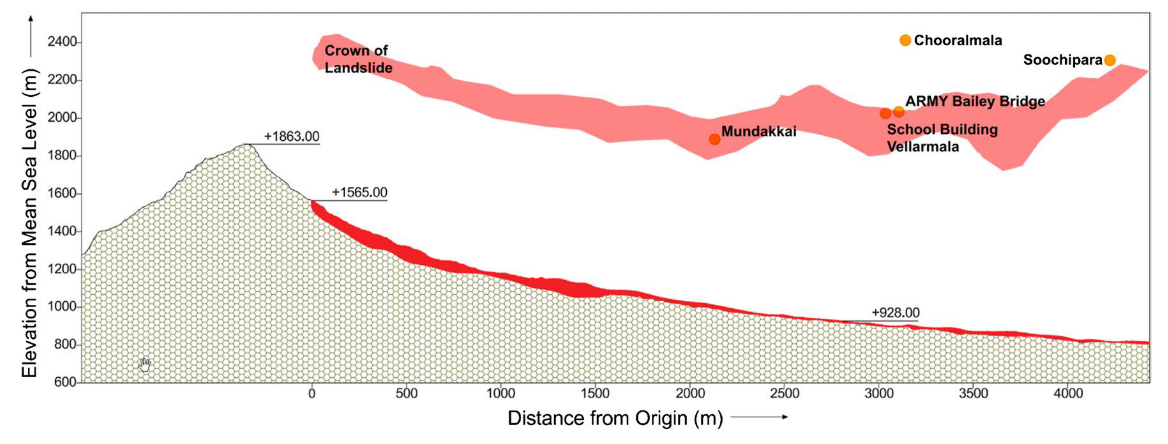
In the last week of July 2024, the Punchirimattom region in Wayanad experienced exceptionally heavy and continuous rain- fall events, leading to two major landslides in the early hours of 30/07/2024 and a devastating debris flow that engulfed four places in the Meppadi Panchayath, namely, Punchirimattom, Mundakkai, Chooralmala, and Attamala. Over 200 buildings were washed away, and over 400 were damaged partially or fully, including two schools, one in Mundakkai and the other in Chooralmala. Three bridges were destroyed during the massive debris flow. This event has been described as one of the deadliest landslides of recent times. The loss of lives is currently reported as 251, and 47 individuals are still missing. Assessing the feasibility of continued habitation in the affected villages is crucial, given the significant debris deposited by the landslide.